16 AUG 2026
THE TRIAL COLLAPSED. THE LABEL STAYED.
A tabloid sting published in June 2013 presented a mainstream singer and television judge as a fixer for a cocaine deal. The prosecution that followed collapsed thirteen months later, after the trial judge found strong grounds to believe the reporter had lied.
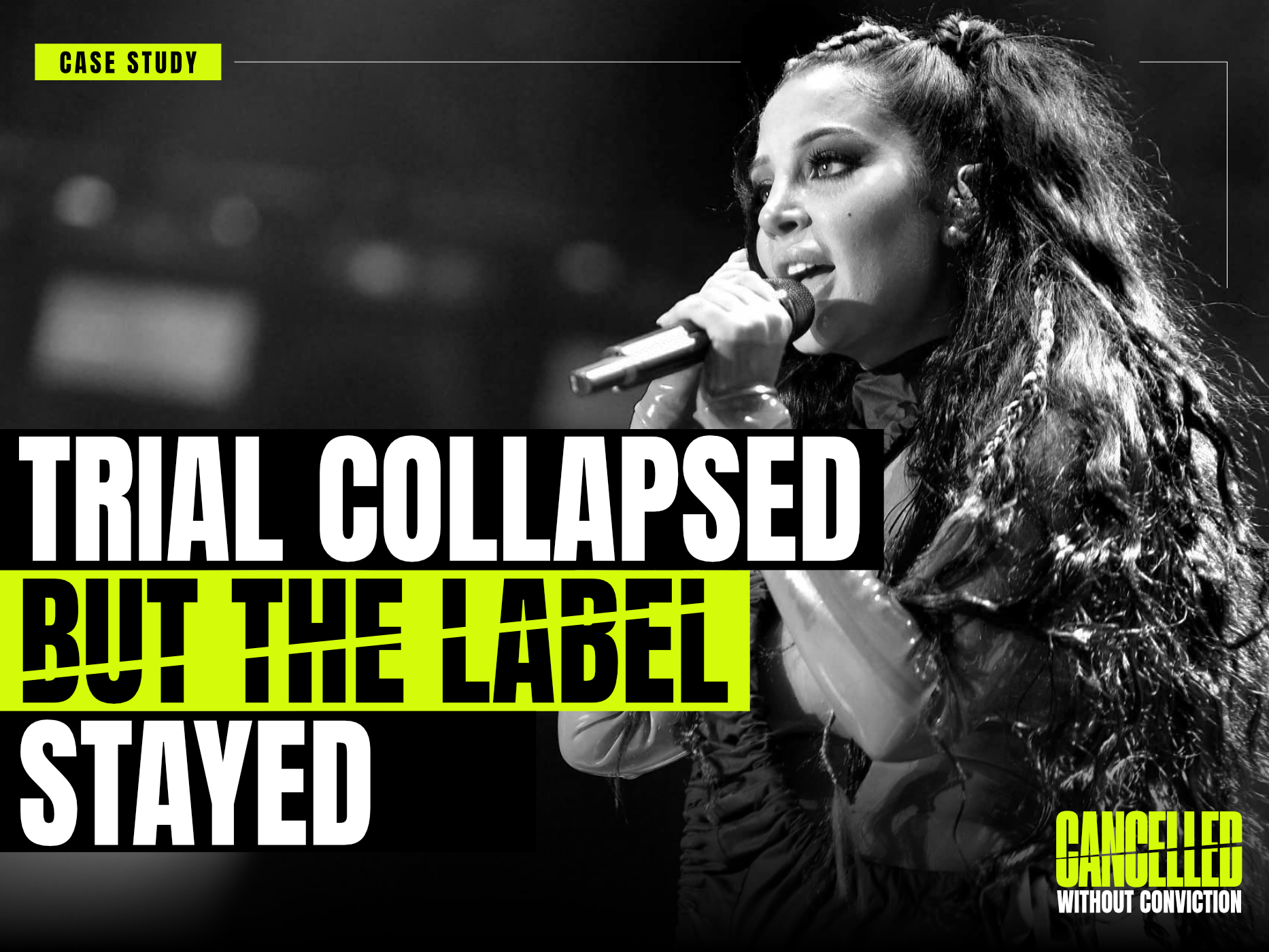
On 2 June 2013 the Sun on Sunday published an investigation by the undercover reporter Mazher Mahmood, who had posed as a film producer offering Tulisa Contostavlos a role. The paper reported that she had arranged the supply of cocaine. She was arrested days later and charged in December 2013 with being concerned in the supply of a class A drug. She denied the charge and said she had been induced to play a part for people she believed were casting her.
The commercial consequences arrived first. She had left the X Factor panel two weeks before publication. What went afterwards were her endorsement contracts, valued by her lawyers at more than £725,000 a year, and the broadcast work that follows from being a mainstream television name. For eighteen months she was described across front pages as a drug dealer.
On 21 July 2014, at Southwark Crown Court, Judge Alistair McCreath stopped the trial. He said there were strong grounds to believe Mahmood had lied at a pre-trial hearing about his contact with his driver, Alan Smith, who had changed a witness statement in a way that removed Contostavlos's disapproving remarks about drugs. No evidence was offered and formal not guilty verdicts were entered. A jury never considered the charge.
In October 2016 Mahmood and Smith were convicted at the Old Bailey of conspiring to pervert the course of justice in connection with that case. Mahmood was jailed for 15 months and dismissed by News UK. Prosecutors dropped other live cases in which he was due to give evidence, and past convictions linked to his work were reviewed.
Three years and four months separated the front page from the reporter's sentencing. The original allegation was published with the full weight of a Sunday tabloid; the collapse was reported as court news, and the conviction of the reporter as media news. Both outcomes are on the public record. Only one of them shaped how she was described for the years in between.
TELL US YOUR STORY
KNOW SOMEONE WHO WAS CANCELLED WITHOUT CONVICTION? SHARE THEIR STORY.