16 SEP 2026
THE CALL THEY RELEASED IN PIECES
In 2016 selected clips from a phone call between Kanye West and Taylor Swift were released, appearing to prove she had approved lyrics she later denied knowing about. Snake emojis flooded her accounts. In 2020 the full 25-minute recording emerged. It supported the claim for which she had been ridiculed. The fragments had created the verdict. The context arrived four years later.
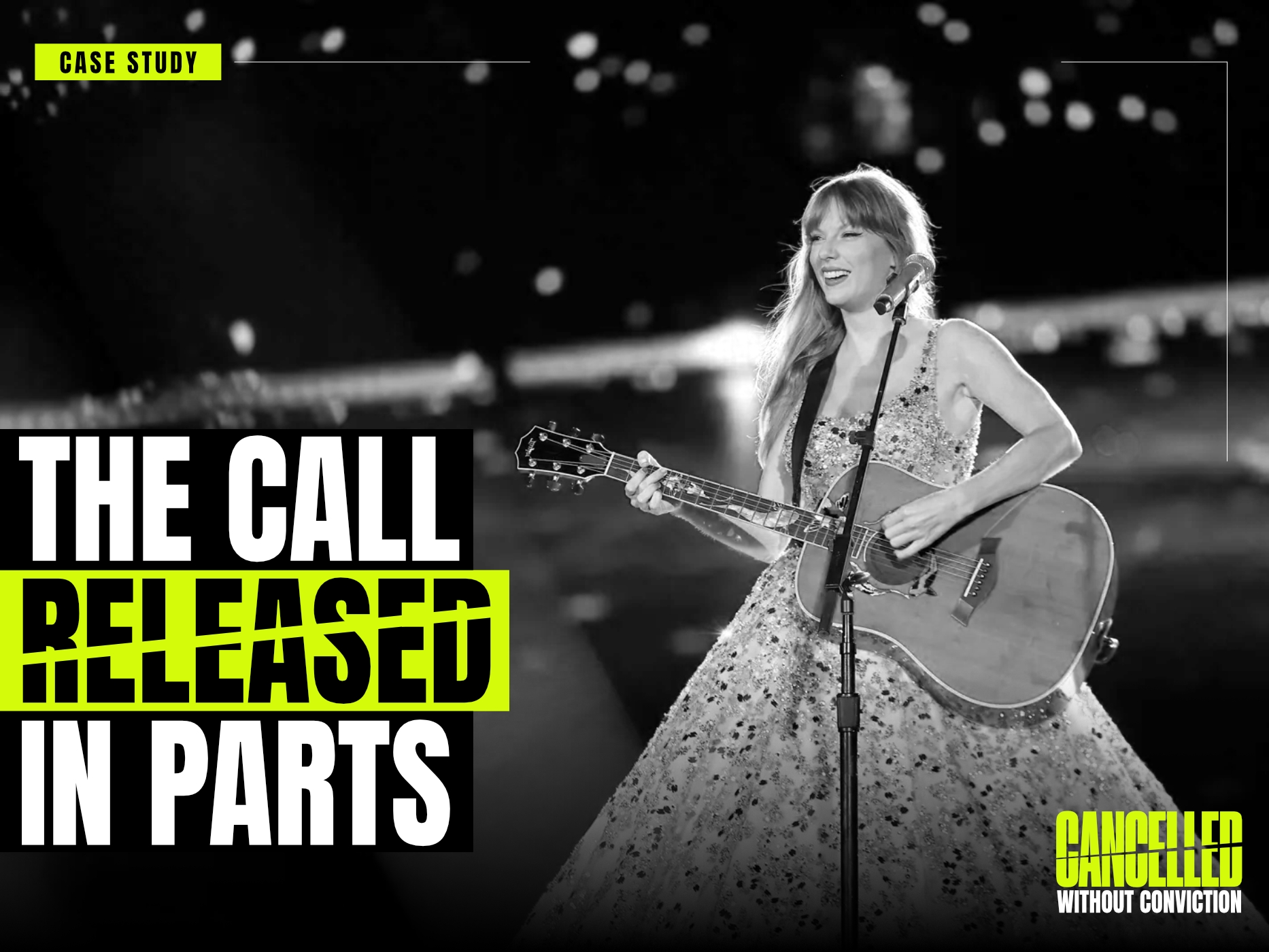
In February 2016, Kanye West released Famous. The song included two lines about Taylor Swift: one suggesting they might have sex and another claiming that West had made her famous. The final version also referred to Swift using a derogatory term.
West said Swift had approved the lyrics during a private telephone call. Swift's representatives disputed that account. They said West had asked her to promote the song, that she had cautioned him against its misogynistic message and that she had never heard the completed track.
In July, Kim Kardashian released selected clips from a recording of the call. They showed Swift responding positively to one proposed lyric and thanking West for contacting her. Presented without the rest of the conversation, the clips appeared to prove that she had approved the song and then denied doing so publicly.
The reaction was immediate. Social media filled Swift's accounts with snake emojis. A hashtag declaring her "over" trended internationally. The disagreement was no longer about a lyric. Swift was presented as calculating, dishonest and exposed by recorded evidence.
She withdrew from public view. Her next album, Reputation, was built partly around the identity imposed on her during the controversy. In 2023, she described the episode as a manufactured attempt to frame her and said she had believed her career was being taken away.
In March 2020, the full 25-minute recording appeared online. It established that West had discussed a version of the line about sex, to which Swift had responded cautiously but positively. It also showed that he had not played her the completed song or told her that the final lyric would call her a "bitch".
The complete recording did not prove that Swift had objected to every reference made about her. It did support the central claim for which she had been ridiculed: she had not heard or approved the final lyric.
There was no court judgment and no formal process capable of clearing either side. There was only a private conversation released first in fragments and later in full.
The fragments created the verdict. The context arrived four years later.
TELL US YOUR STORY
KNOW SOMEONE WHO WAS CANCELLED WITHOUT CONVICTION? SHARE THEIR STORY.