13 SEP 2026
THE HERO RECAST AS THE SUSPECT
Richard Jewell spotted the backpack, raised the alarm and helped move spectators away from the bomb in Centennial Olympic Park in 1996. For three days he was a hero. Then the FBI investigation became international news, and he spent 88 days explaining why he was not a terrorist.
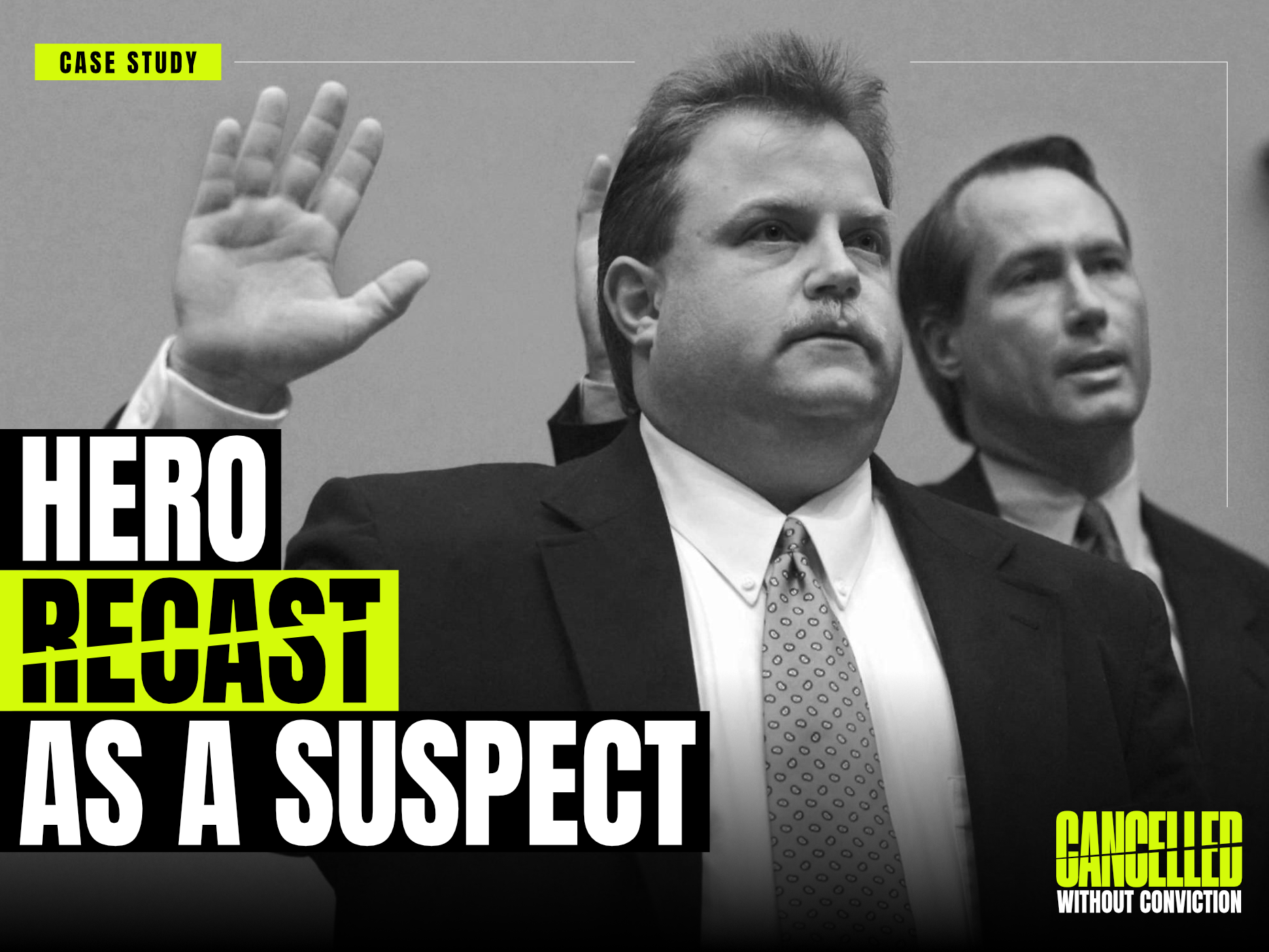
In the early hours of 27 July 1996, security guard Richard Jewell noticed an unattended backpack beneath a bench in Atlanta's Centennial Olympic Park. He alerted police and helped move spectators away while officers investigated. The bomb exploded before the area could be cleared completely, killing Alice Hawthorne and injuring more than 100 people. Jewell's actions were credited with preventing further deaths.
For three days, he was treated as a hero. Then the Atlanta Journal-Constitution reported that the FBI was investigating him. The emerging theory was that Jewell fitted the profile of a frustrated law-enforcement figure who might have planted the bomb in order to discover it and receive praise. A hypothesis became international news before evidence had established that it was true.
Television crews surrounded the apartment Jewell shared with his mother. His home was searched, his movements were followed and his employment history was examined in public. Details that proved nothing—his weight, his personality, his enthusiasm for police work—were used to construct the character of a possible bomber. He was never arrested and never charged.
On 26 October 1996, after 88 days, federal prosecutors formally informed Jewell that he was no longer considered a target of the investigation. The Justice Department expressed regret over the leak that had exposed him to the publicity. Attorney General Janet Reno later apologised. Several media organisations reached settlements with Jewell after he brought legal proceedings, although his case against the Atlanta Journal-Constitution continued beyond his death.
The real bomber, Eric Rudolph, was captured in 2003. In 2005, he pleaded guilty to the Olympic Park bombing and three other attacks, receiving multiple life sentences. Georgia formally honoured Jewell for his heroism in 2006. He died the following year, aged 44.
The evidence eventually restored the correct sequence of events: Jewell found the bomb, raised the alarm and helped save lives. But the correction took nine years to acquire the certainty that the accusation had been given in three days. He entered the park as a security guard, left it as a hero and spent the years afterwards explaining why he was not a terrorist.
SOURCES
TELL US YOUR STORY
KNOW SOMEONE WHO WAS CANCELLED WITHOUT CONVICTION? SHARE THEIR STORY.