19 OCT 2026
THE ARREST THAT BECAME THE VERDICT
Matthew Kelly was arrested over a single historic abuse allegation in January 2003. Five weeks later, police confirmed that no action would be taken because investigators had found insufficient evidence. ITV reinstated him immediately, but Parliament later condemned the newspapers that had conducted a "trial by media" before he was ever charged.
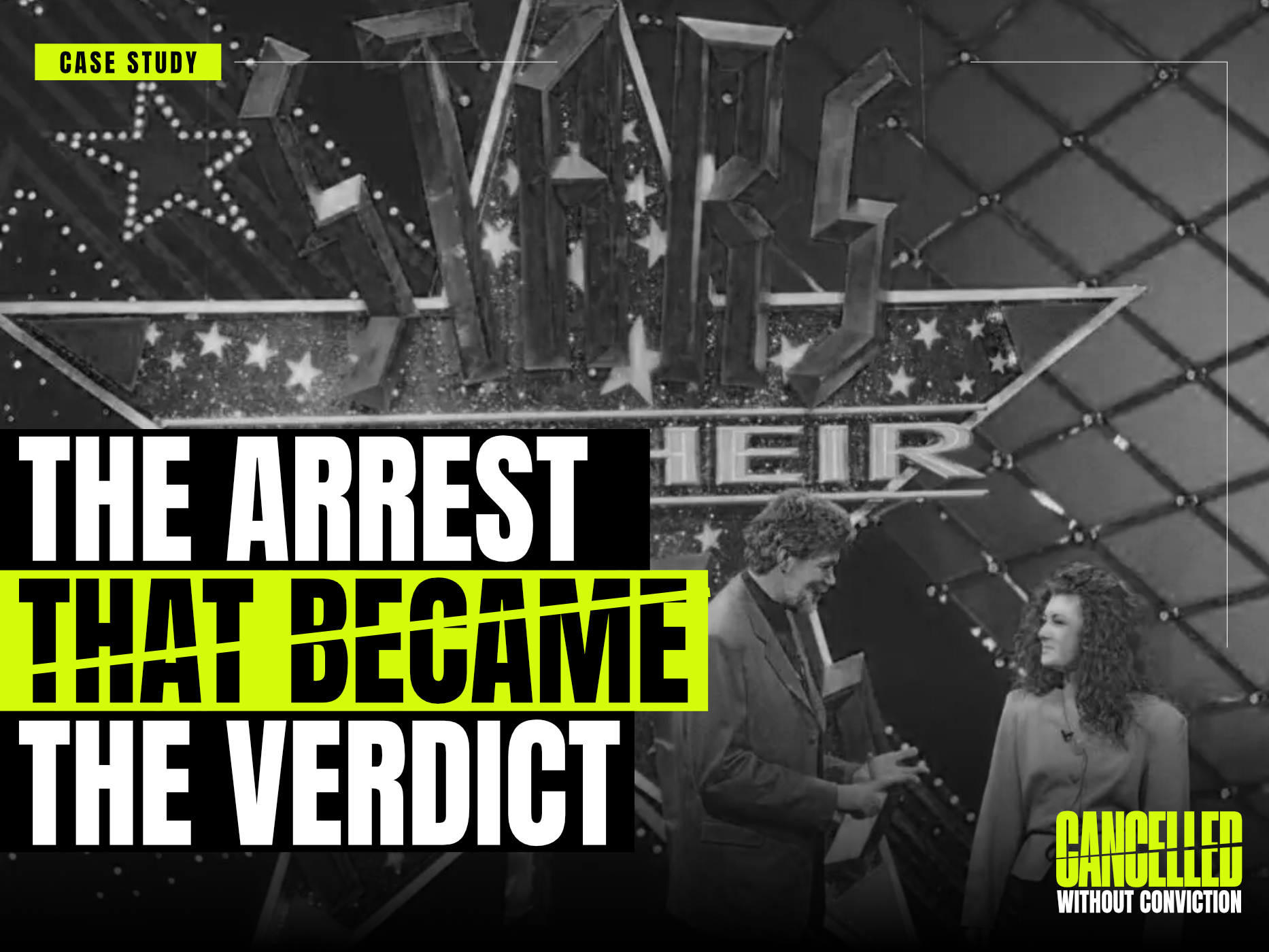
In January 2003, Matthew Kelly was one of the most familiar presenters on British television. Stars in Their Eyes regularly attracted audiences of more than ten million, and Kelly had hosted the programme for a decade.
On 15 January, police arrested him outside Birmingham Repertory Theatre, where he was appearing in a pantomime. He was questioned over a single allegation of historic abuse involving a boy. Kelly emphatically denied it.
The arrest immediately became national news. Newspapers examined his private life and printed allegations that had not been tested, let alone proven. Kelly stepped away from three special editions of Stars in Their Eyes while the investigation continued.
Police also found a small quantity of a Class A drug while searching his home. Kelly accepted a formal caution for possession and apologised. It was a separate matter, but its inclusion in the coverage added to the impression of a collapsing public figure.
On 24 February, five weeks after his arrest, Surrey Police confirmed that no action would be taken over the abuse allegation. Investigators had found insufficient evidence. Kelly said it was evident that there had been no truth in the claim.
ITV reinstated him immediately. He returned to the theatre and later resumed presenting Stars in Their Eyes. But the speed of his professional return could not erase the coverage generated by his public arrest.
His case reached Parliament. An Early Day Motion welcomed Kelly's "complete exoneration" and condemned newspapers for conducting a "trial by media" even though he had never been charged. MPs subsequently cited his experience during debates about protecting the identities of suspects before charge.
The police investigation lasted five weeks. The allegation remained searchable for decades.
Kelly was publicly identified at the beginning of the process, when the evidence was unresolved. By the time that process cleared him, the most damaging version of the story had already been published.
TELL US YOUR STORY
KNOW SOMEONE WHO WAS CANCELLED WITHOUT CONVICTION? SHARE THEIR STORY.