26 SEP 2026
THE PLAGIARISM VERDICT THAT FELL APART
A 2019 jury found Katy Perry liable for copying an eight-note sequence in Dark Horse from a Christian rap track, awarding $2.8 million. In 2020 a federal judge vacated the verdict, finding the disputed elements too commonplace to be protected. In 2022 the Ninth Circuit unanimously agreed. The accusation took one sentence. Correcting it took three years and two courts.
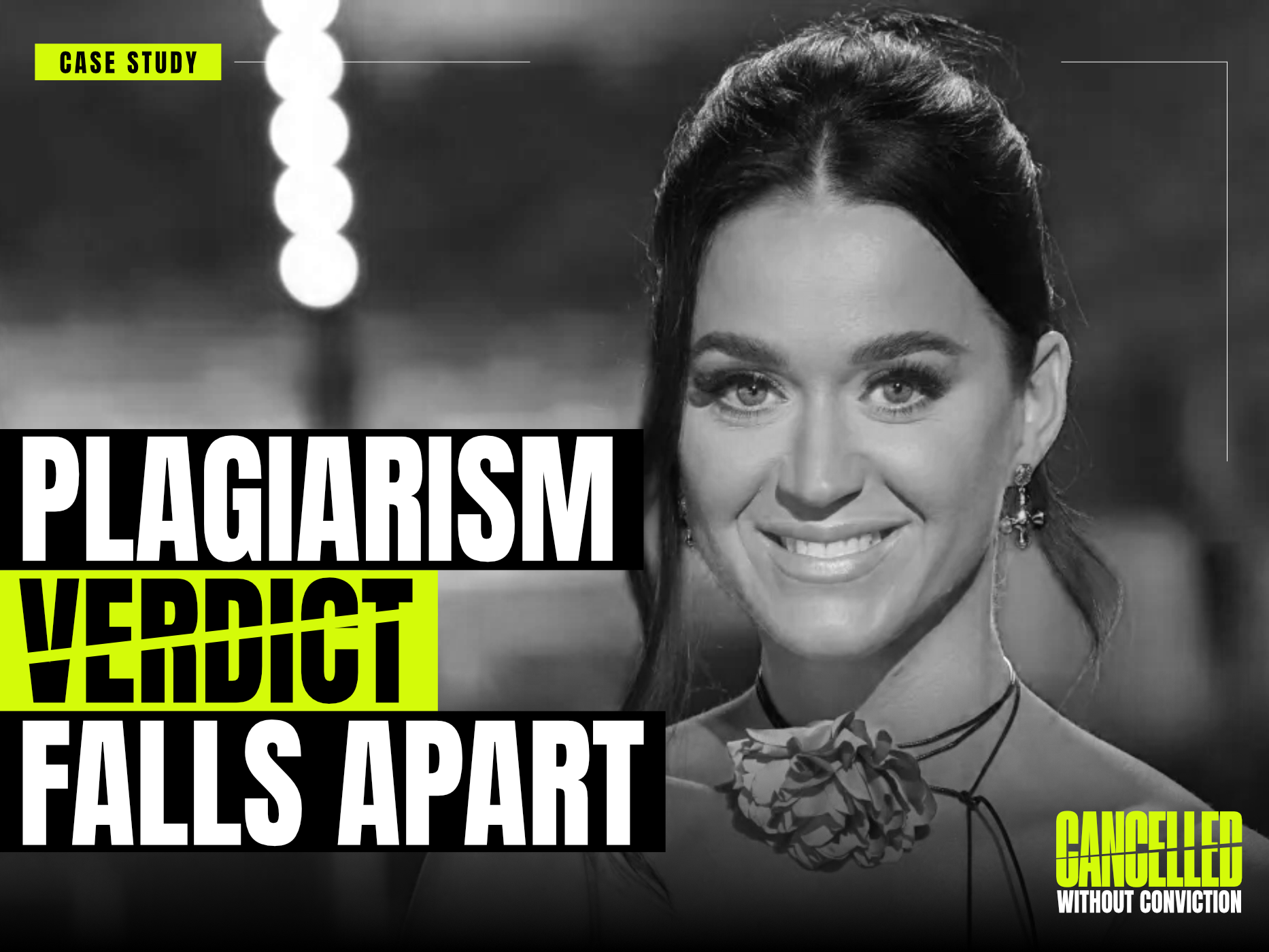
Katy Perry released Dark Horse in 2013. The song became one of her largest hits, reaching number one in the United States and accumulating billions of views and streams.
Two years later, Christian rapper Marcus Gray, known as Flame, brought a copyright claim against Perry and her collaborators. He argued that an eight-note repeating sequence in Dark Horse had been copied from his 2009 song Joyful Noise.
Perry denied hearing the earlier recording before writing her song. The case nevertheless reached a jury in 2019.
The jury found Perry, Capitol Records and several collaborators liable for copyright infringement. It subsequently awarded Gray and his co-writers approximately $2.8 million in damages.
The verdict generated an immediate and easily understood conclusion: Katy Perry had plagiarised another artist's music.
The legal analysis did not end there.
Perry's lawyers argued that the disputed sequence — known as an ostinato — was constructed from commonplace musical elements. None of those elements was independently original, and their arrangement was not distinctive enough to attract copyright protection.
In March 2020, US District Judge Christina Snyder vacated the jury's verdict. She found that the evidence could not legally support a conclusion that Perry had copied protected original expression. Once the ordinary musical components were removed from the comparison, there was no substantial similarity on which liability could rest.
Gray appealed.
In March 2022, the Ninth Circuit Court of Appeals unanimously upheld the decision in Perry's favour. Its judgment concluded that the two sequences consisted entirely of commonplace musical elements and that their similarities did not result from an original combination of those elements.
The original jury verdict was therefore unsupported by the evidence. The $2.8 million award remained cancelled.
The distinction was technical but important. The court did not decide that similarities between the songs were imaginary. It decided that the shared material was not something any songwriter could own.
A jury verdict branded Dark Horse plagiarism. A federal judge removed that verdict, and three appeal judges agreed.
The accusation could be expressed in one sentence. Correcting it required three years and two courts.
TELL US YOUR STORY
KNOW SOMEONE WHO WAS CANCELLED WITHOUT CONVICTION? SHARE THEIR STORY.