1 OCT 2026
DROPPED BEFORE ANY CHARGE WAS BROUGHT
In September 2005 the Daily Mirror published hidden-camera footage it said showed Kate Moss taking cocaine. H&M, Burberry and Chanel cut ties within days. Nine months later the CPS announced no charges would be brought: without a seized substance or forensic evidence, the footage alone could not prove beyond doubt what the powder was.
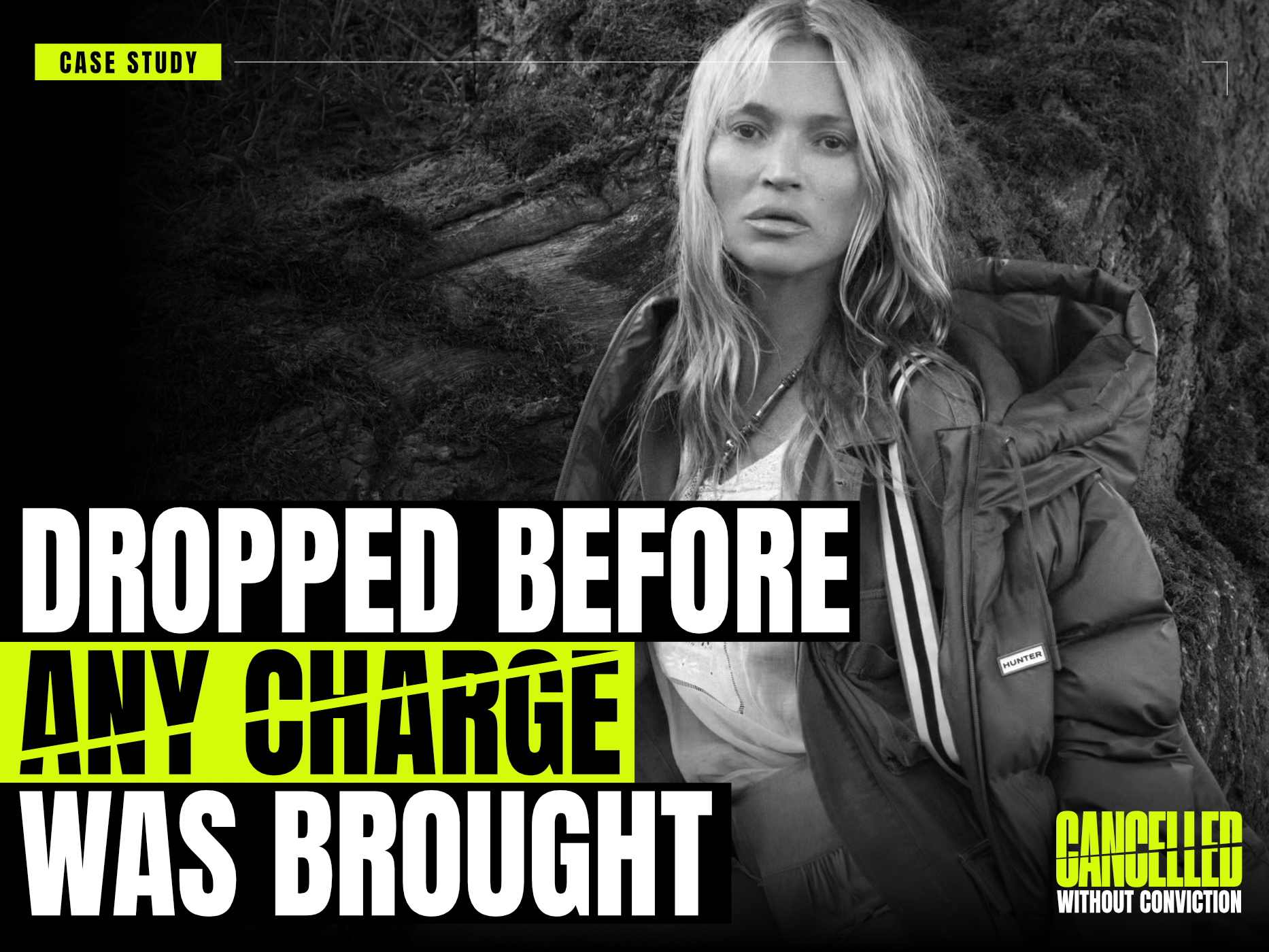
In September 2005, the Daily Mirror published images taken from hidden-camera footage inside a London recording studio. The newspaper said they showed Kate Moss taking cocaine.
The commercial response was immediate. H&M cancelled a planned campaign. Burberry and Chanel also ended their relationships with her. Moss had spent years at the centre of the fashion industry; within days, she had become a liability to the brands paying for her image.
Moss issued a statement accepting responsibility for behaviour that had reflected badly on her family, friends and colleagues. She did not identify the substance shown in the footage or admit committing a criminal offence.
The Metropolitan Police opened an investigation. Moss was interviewed under caution but was not arrested. The footage was analysed and the case referred to the Crown Prosecution Service.
On 15 June 2006, nine months after the images were published, the CPS announced that no charges would be brought.
Prosecutors said the footage indicated that controlled drugs had been used and provided to others. But there was no seized substance, forensic evidence or direct witness evidence capable of establishing precisely what the powder was.
That distinction mattered. Cocaine and ecstasy were Class A drugs; powdered amphetamine could fall into a different legal category. A criminal prosecution required proof beyond reasonable doubt of the substance involved. The video could not provide it.
The CPS concluded that there was insufficient evidence to create a realistic prospect of conviction.
Moss was never charged. Her career eventually recovered, and several major fashion houses later worked with her again. But the contracts had disappeared long before investigators reached their decision.
The commercial process required a front page and several indistinct images. The criminal process required admissible evidence.
One reached its verdict in days. The other could not safely bring a charge.
TELL US YOUR STORY
KNOW SOMEONE WHO WAS CANCELLED WITHOUT CONVICTION? SHARE THEIR STORY.