30 OCT 2026
THE BOYCOTT BEFORE THE BROADCAST
Stop Funding Hate began pressuring advertisers to avoid GB News four months before the channel aired its first programme. Good Law Project later joined and amplified the same model: target a publication’s funders and demand commercial consequences.
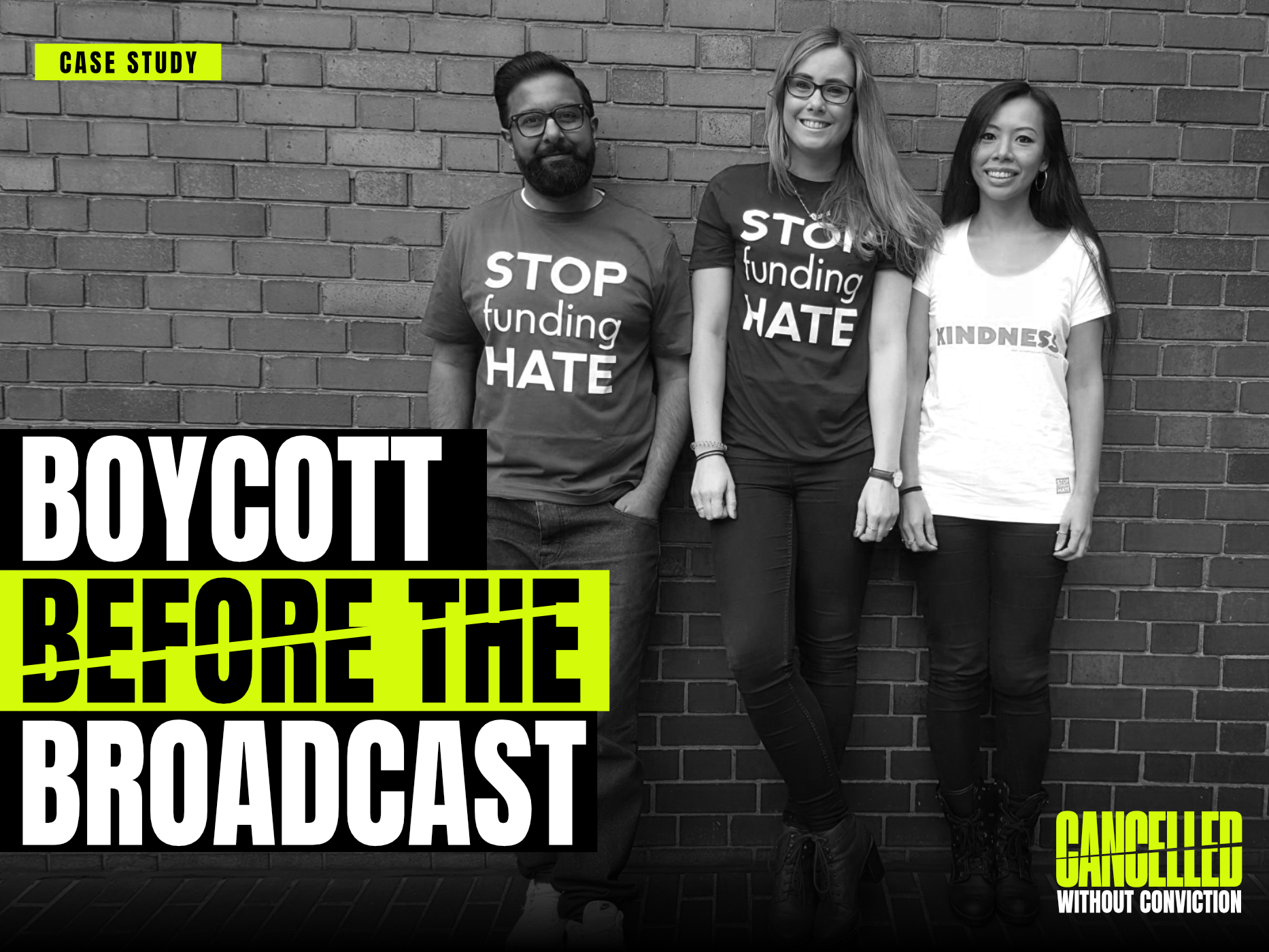
GB News began broadcasting on 13 June 2021. The campaign to deprive it of advertising revenue had begun four months earlier.
In February, Stop Funding Hate asked supporters to contact major companies and urge them not to advertise with the prospective channel. The campaign characterised GB News as an attempt to introduce “Fox News-style” broadcasting to Britain.
At that point, there had been publicity, presenter appointments and statements about the channel’s intended direction. There had not been a programme.
Stop Funding Hate acknowledged that it was acting early because advertising contracts could be arranged in advance. Its supporters contacted companies before those businesses—or the public—could assess GB News’s actual output.
After the channel launched, advertisements from household brands appeared during its programmes. Online pressure followed. Stop Funding Hate published a list of companies that had pulled or paused their advertising and thanked supporters for taking action.
The position was less straightforward than the campaign suggested.
GB News’s advertising was sold through Sky Media, which placed campaigns across approximately 130 channels. Several companies said they had not specifically selected GB News and had been unaware their advertisements would appear there.
Some businesses paused their campaigns to assess the new channel rather than joining a permanent boycott. MoneySuperMarket initially said it had suspended advertising, then apologised for the confusion and clarified that it was not boycotting GB News. IKEA softened its initial position, while Vodafone said it might advertise after making a commercial assessment.
Stop Funding Hate nevertheless presented the pressure campaign as a victory.
Four years later, Good Law Project formally joined the same approach. In May 2025, GLP and Stop Funding Hate launched a joint campaign against companies advertising on GB News’s website and YouTube channel. GLP told brands to choose between “hate or Pride” and mobilised supporters to contact them.
The organisations also jointly challenged GB News over favourable editorial coverage of Marks & Spencer after believing the retailer had reduced its advertising. GB News maintained that the material was ordinary editorial content and threatened legal action over suggestions otherwise.
GB News has subsequently breached Ofcom rules. Those findings provide legitimate grounds for scrutiny of particular broadcasts. They do not retrospectively supply evidence for a boycott launched before the channel existed on air.
The distinction matters because commercial pressure is a form of punishment. It can restrict a publication without winning an argument, proving a legal breach or securing a regulatory decision.
Stop Funding Hate acted before the first broadcast. GLP later adopted and amplified the model: identify the target, pressure its funders and demand commercial consequences.
The verdict was delivered first. The evidence was expected to arrive later.
SOURCES
TELL US YOUR STORY
KNOW SOMEONE WHO WAS CANCELLED WITHOUT CONVICTION? SHARE THEIR STORY.