5 OCT 2026
THE PUNCH THE COURT COULDN'T PROVE
After a performance in September 2008, Amy Winehouse was accused of punching a dancer backstage. The charge of common assault reached Westminster Magistrates' Court in July 2009. The judge found her not guilty: he could not be sure the contact had not been accidental. A reputation is not evidence of a separate offence.
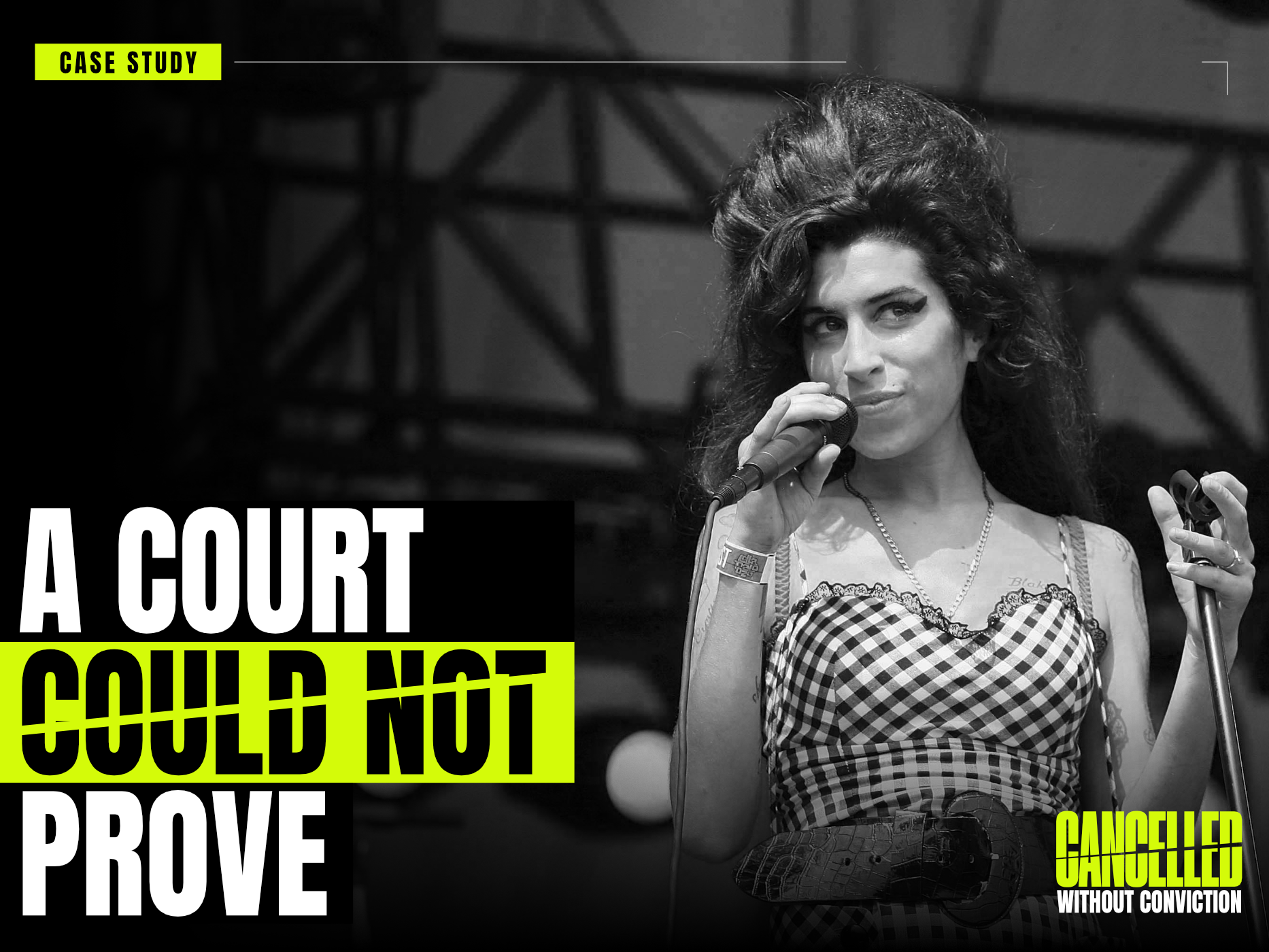
On 25 September 2008, Amy Winehouse performed at the Prince's Trust Ball in Berkeley Square, London. Afterwards, dancer Sherene Flash approached her backstage and asked to take a photograph.
Flash later alleged that Winehouse had deliberately punched her in the right eye. Winehouse denied it. She said Flash had placed an arm around her and that she had raised her hand and pushed her away because she felt intimidated.
Winehouse was charged with common assault in March 2009.
The allegation arrived during a period in which her addictions, health and private life were already being documented relentlessly. A new criminal charge fitted easily into the public version of Winehouse as chaotic and violent.
But a reputation is not evidence of a separate offence.
The case reached the City of Westminster Magistrates' Court in July 2009. Over two days, District Judge Timothy Workman heard conflicting accounts from Winehouse, Flash and those who had been backstage.
Several witnesses had been drinking. Flash acknowledged that she had been tipsy. The medical evidence also did not demonstrate the kind of injury normally associated with a forceful punch to the eye.
On 24 July, the judge found Winehouse not guilty.
He said that, having considered all the witnesses, he could not be sure that the contact had not been accidental. The prosecution had therefore failed to prove a deliberate assault.
Winehouse left court saying that she was relieved and going home.
The acquittal did not erase the allegation from the wider narrative surrounding her. Her documented personal difficulties made almost any new accusation appear immediately plausible, even before it had been tested.
Amy Winehouse was not found guilty because she was famous, troubled or sometimes self-destructive. The court considered the evidence relating to one specific allegation and found it insufficient.
The public saw another episode in an existing story.
The judge saw a charge that had not been proved.
TELL US YOUR STORY
KNOW SOMEONE WHO WAS CANCELLED WITHOUT CONVICTION? SHARE THEIR STORY.